
The intense pressure of competitive gaming can trigger powerful psychological responses
In the heat of a competitive match, something shifts. A player who moments ago was calm and strategic suddenly erupts into a torrent of rage, hurling insults at teammates, smashing peripherals, or rage-quitting mid-game. This phenomenon, commonly known as "gamer rage" or "tilting," is far more than simple frustration—it's a complex psychological response rooted in our brain's most primitive survival mechanisms. Understanding why players lose control during competitive gaming sessions requires examining the intricate interplay between stress responses, ego threats, social dynamics, and the unique environmental factors that characterize online multiplayer environments.
The prevalence of toxic gaming behavior has become one of the most pressing issues facing the gaming industry today. Studies indicate that approximately 74% of online gamers have experienced some form of harassment, with competitive games showing even higher rates of aggressive behavior. This isn't merely about poor sportsmanship—it represents a systematic breakdown of emotional regulation that occurs when specific psychological triggers converge in the high-stakes environment of competitive play.
The Neurological Foundation of Gaming Rage
At its core, the loss of control experienced during competitive gaming is a neurological phenomenon. When players engage in high-stakes matches, their brains enter a heightened state of arousal that activates the sympathetic nervous system—the same system responsible for the "fight or flight" response. This activation floods the body with stress hormones, particularly cortisol and adrenaline, preparing the individual for immediate action.

Key brain regions involved in emotional regulation and stress response during gaming
The amygdala, our brain's emotional processing center, becomes hyperactive during competitive play. This ancient structure, evolved to detect threats in our environment, cannot distinguish between a physical danger and a virtual defeat. When a player faces elimination, loses a crucial objective, or experiences what they perceive as unfair gameplay, the amygdala triggers an emotional response proportional to a genuine threat to survival.
Critical Insight: The prefrontal cortex, responsible for rational thinking and emotional regulation, becomes less effective under stress. This creates a neurological perfect storm where emotional responses intensify while our ability to control them diminishes—a phenomenon neuroscientists call "amygdala hijacking."
Research in neuroscience has demonstrated that repeated exposure to competitive stress can actually alter brain chemistry over time. Players who regularly engage in high-intensity competitive gaming may develop heightened sensitivity to perceived threats, making them more prone to explosive reactions. This neuroplasticity works both ways, however—understanding these mechanisms is the first step toward developing healthier emotional regulation strategies.
The Role of Dopamine in Competitive Addiction
Competitive gaming creates a powerful dopamine feedback loop that intensifies emotional responses. Every victory, every successful play, every rank increase triggers a release of dopamine—the neurotransmitter associated with pleasure and reward. This creates a biochemical addiction to winning that makes losses feel exponentially more painful. When players experience a loss, they're not just disappointed; they're experiencing a form of dopamine withdrawal that can manifest as irritability, aggression, and desperate attempts to recapture that winning feeling.
The intermittent reinforcement schedule of competitive gaming—where wins and losses are unpredictable—creates one of the most powerful forms of behavioral conditioning known to psychology. This same mechanism underlies gambling addiction, and it explains why players often continue playing even when they're clearly tilted, chasing that next dopamine hit despite mounting frustration.
Ego Threat and Identity Investment in Gaming
Beyond neurological factors, competitive gaming rage is deeply intertwined with concepts of self-worth and identity. For many players, particularly those who invest significant time in competitive games, their gaming performance becomes inextricably linked to their sense of self. This phenomenon, known as "ego investment," transforms every match into a referendum on personal value.

Ranking systems create powerful psychological investment in gaming performance
When a player's identity becomes fused with their gaming performance, losses trigger what psychologists call "ego threat"—a perceived attack on one's self-concept. This threat activates defensive mechanisms that can manifest as aggression, blame-shifting, and hostile behavior toward others. The player isn't just upset about losing a game; they're experiencing a fundamental challenge to their self-worth.
Research Finding: Studies show that players who strongly identify as "gamers" are 3.2 times more likely to exhibit toxic gaming behavior when facing repeated losses, compared to casual players who maintain separation between gaming performance and personal identity.
This ego investment is particularly pronounced in games with visible ranking systems. Every loss doesn't just feel bad—it represents a tangible decrease in status, a public marker of failure that others can see. The fear of rank loss creates anticipatory anxiety that heightens stress responses even before matches begin, priming players for emotional volatility.
The Dunning-Kruger Effect in Competitive Gaming
The Dunning-Kruger effect—where individuals with limited competence overestimate their abilities—plays a significant role in gaming rage. Many players believe they're performing at a higher level than they actually are, leading to a persistent attribution bias where victories are credited to skill while defeats are blamed on external factors: bad teammates, lag, "broken" game mechanics, or opponent "cheese" strategies.
This cognitive distortion creates a perpetual state of perceived injustice. When reality contradicts a player's inflated self-assessment, the resulting cognitive dissonance triggers defensive aggression. Rather than accepting responsibility for mistakes, players lash out at convenient scapegoats, most commonly their teammates. This blame-shifting serves to protect the ego but creates a toxic environment that perpetuates the cycle of aggression.
The Anonymity Factor: Disinhibition in Online Spaces
One of the most significant amplifiers of toxic gaming behavior is the online disinhibition effect—the phenomenon where people behave more aggressively online than they would in face-to-face interactions. This psychological effect is particularly powerful in gaming environments, where multiple factors converge to reduce social inhibitions.
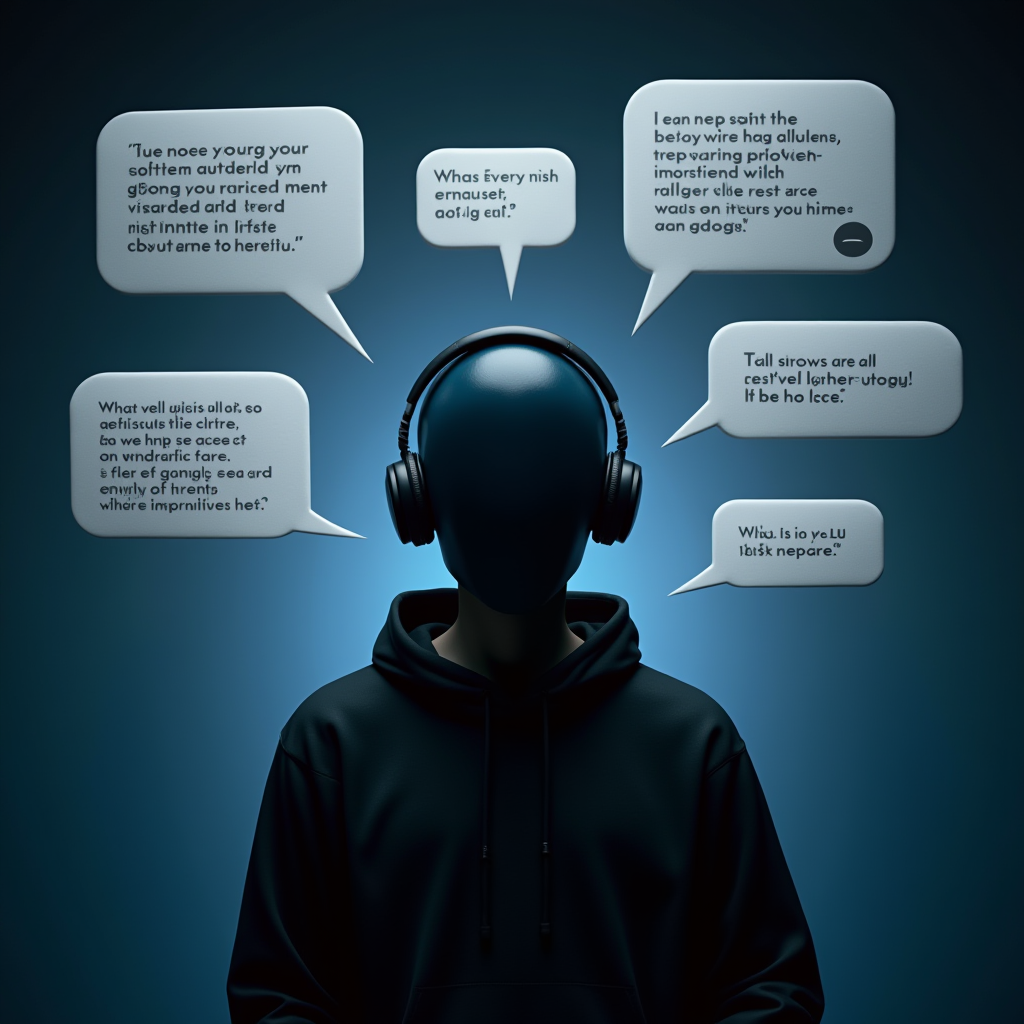
Anonymity in online gaming reduces social accountability and enables aggressive behavior
Anonymity serves as a psychological shield that separates actions from consequences. When players hide behind usernames and avatars, they experience a dissociation from their real-world identity. This dissociation reduces empathy and accountability, making it easier to engage in behavior they would never exhibit in person. The person on the receiving end of harassment becomes dehumanized—reduced to a username or character model rather than recognized as a fellow human being.
The Perfect Storm of Disinhibition
Online gaming environments combine multiple disinhibition factors: anonymity, physical distance, lack of eye contact, minimization of authority, and the perception that online interactions are "not real." When these factors align during high-stress competitive play, they create conditions where even typically well-adjusted individuals may engage in shocking levels of aggression and harassment.
The asynchronous nature of online communication also contributes to disinhibition. In text chat, players don't receive immediate feedback about the impact of their words. They don't see the hurt expression, hear the trembling voice, or witness the emotional damage their harassment causes. This absence of immediate consequences creates a feedback vacuum that fails to trigger the natural empathy responses that would normally moderate behavior.
The Bystander Effect in Gaming Communities
The presence of other players paradoxically increases rather than decreases toxic behavior through a phenomenon known as the bystander effect. When multiple people witness harassment, each individual feels less personal responsibility to intervene, assuming someone else will address the problem. This diffusion of responsibility allows toxic gaming behavior to flourish unchecked, as perpetrators correctly perceive that their actions will likely go unchallenged.
Furthermore, when toxic behavior goes unaddressed, it establishes a social norm that such conduct is acceptable. New players entering these environments quickly learn that aggression is part of the culture, perpetuating a cycle where hate in game chats becomes normalized and even expected.
Competitive Stress and Performance Anxiety
The competitive nature of multiplayer games creates unique stressors that don't exist in single-player experiences. Players face constant evaluation—not just from themselves but from teammates, opponents, and sometimes spectators. This social-evaluative threat activates the hypothalamic-pituitary-adrenal (HPA) axis, triggering a cascade of stress hormones that impair cognitive function and emotional regulation.
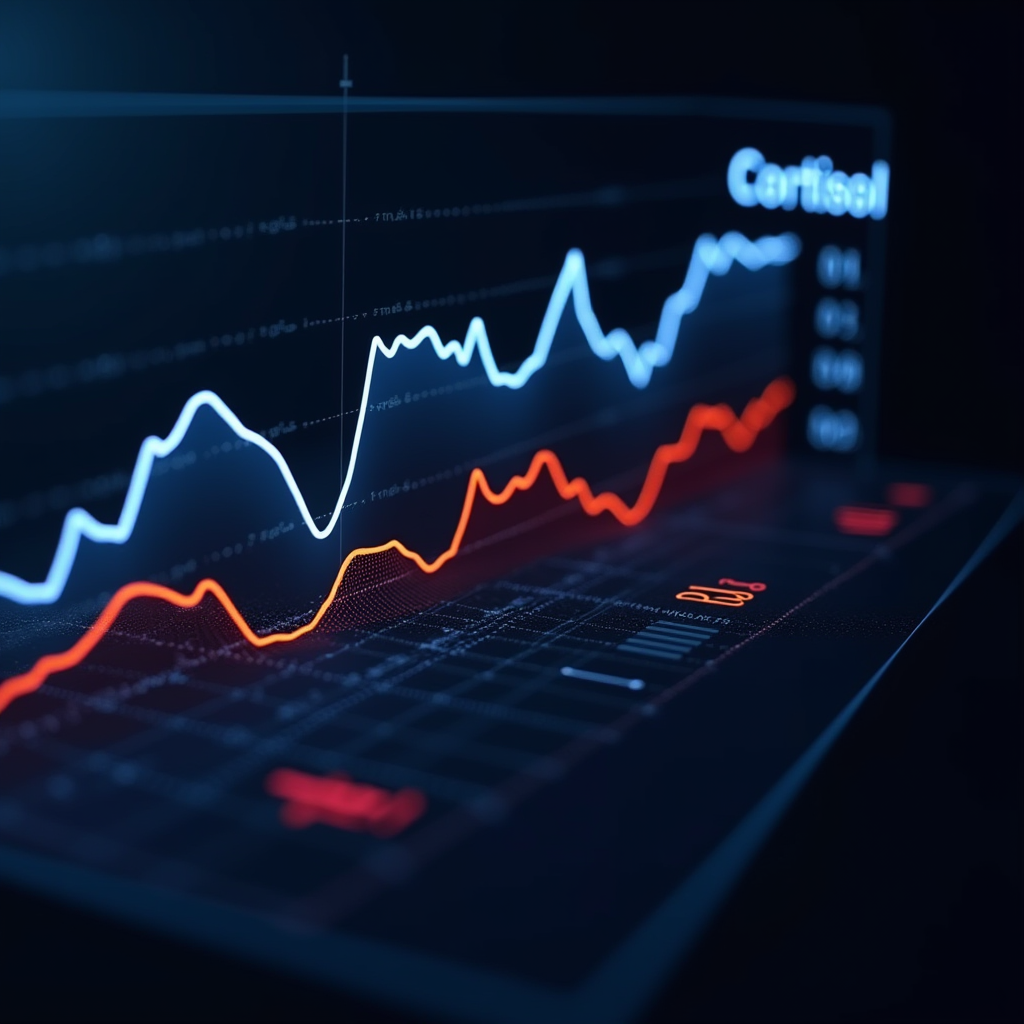
Stress hormone levels fluctuate dramatically during competitive gaming sessions
Performance anxiety in competitive gaming manifests through several mechanisms. The fear of letting down teammates creates social pressure that intensifies with each mistake. The visibility of performance metrics—kill/death ratios, damage dealt, objectives captured—provides constant feedback that can either boost confidence or trigger spiraling self-doubt. When players begin to doubt their abilities, they often enter a state of "choking under pressure," where anxiety actively impairs performance, creating a self-fulfilling prophecy of failure.
This anxiety is compounded by the real-time nature of competitive games. Unlike turn-based games that allow for careful deliberation, real-time competitive games demand split-second decisions under pressure. The cognitive load of processing multiple information streams—enemy positions, teammate status, resource management, map awareness—while simultaneously executing complex mechanical inputs creates mental fatigue that depletes the psychological resources needed for emotional regulation.
The Tilt Spiral: Once a player begins to tilt, their impaired judgment leads to more mistakes, which increases frustration, which further impairs judgment—creating a downward spiral that's difficult to escape without external intervention or a conscious decision to take a break.
The Sunk Cost Fallacy in Gaming Sessions
The sunk cost fallacy—the tendency to continue investing in something because of past investment—plays a crucial role in extended gaming sessions that devolve into toxicity. Players who have already invested hours into climbing ranks feel compelled to continue playing even when they're clearly tilted, reasoning that stopping would "waste" the time already spent. This flawed logic keeps players in a state of mounting frustration, where each additional loss feels more devastating because it represents not just a current failure but a negation of all previous effort.
Social Dynamics and Mob Mentality
Competitive gaming rarely occurs in isolation—it's a fundamentally social activity that involves complex group dynamics. These social factors can either mitigate or amplify toxic behavior depending on the specific circumstances and community norms established within a game.
Mob mentality, or herd behavior, emerges when individuals in a group begin to act collectively without centralized direction. In gaming contexts, this manifests when one player's toxicity spreads to others, creating a cascade effect where the entire team devolves into mutual recrimination and harassment. This social contagion is particularly powerful because it provides social validation for aggressive behavior—if everyone is being toxic, it must be acceptable.
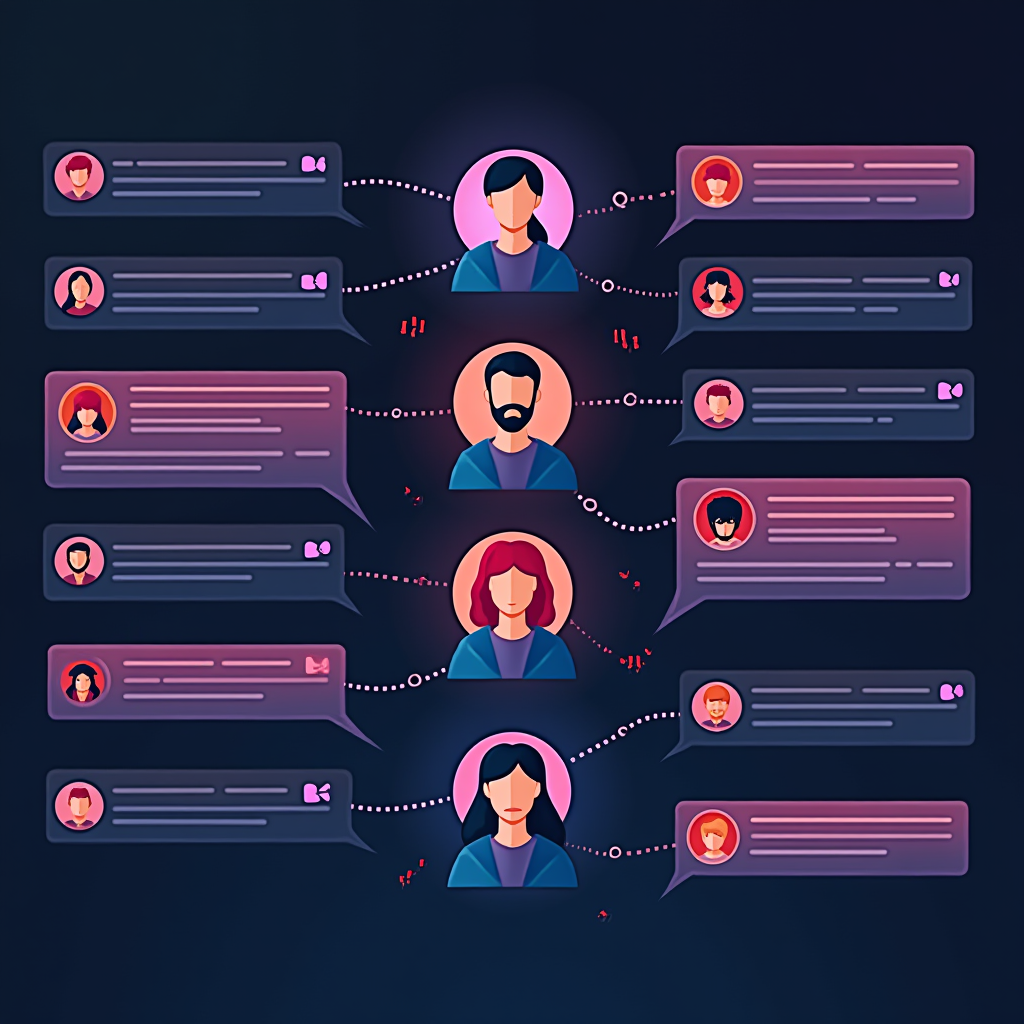
Team dynamics can quickly deteriorate when toxicity spreads through social contagion
The phenomenon of scapegoating is particularly prevalent in team-based competitive games. When a team is losing, members often seek to identify a single individual to blame, redirecting their frustration toward a convenient target rather than examining systemic issues or their own contributions to the loss. This scapegoating serves multiple psychological functions: it protects individual egos, provides a sense of control over an uncontrollable situation, and creates group cohesion through shared antagonism toward a common "enemy."
In-Group vs. Out-Group Dynamics
Competitive gaming naturally creates in-group (teammates) and out-group (opponents) divisions that can trigger tribal psychological responses. Research in social psychology demonstrates that humans have an innate tendency to favor their in-group while derogating out-groups, a bias that intensifies under competitive conditions. This tribalism explains why players often exhibit different standards of behavior toward teammates versus opponents, and why inter-team toxicity can be just as damaging as cross-team harassment.
The temporary nature of team formation in many competitive games exacerbates these dynamics. When players are randomly matched with strangers, they lack the social bonds and shared history that would normally moderate aggressive impulses. There's no relationship to preserve, no future interaction to consider—only the immediate competitive context that frames teammates as either assets or liabilities in the pursuit of victory.
Game Design Elements That Amplify Rage
While psychological factors form the foundation of gaming rage, specific game design elements can either mitigate or amplify these tendencies. Understanding how game mechanics influence player psychology is crucial for both players seeking to manage their emotions and developers working to create healthier gaming environments.
Design Impact: Games with visible ranking systems and harsh rank-loss penalties show 58% higher rates of reported toxic behavior compared to games with hidden matchmaking ratings or more forgiving progression systems.
Punishment-heavy progression systems create what psychologists call "loss aversion"—the principle that losses feel approximately twice as painful as equivalent gains feel pleasurable. When games implement systems where a single loss can erase the progress of multiple victories, they create disproportionate emotional stakes that intensify rage responses. Players aren't just disappointed by a loss; they're experiencing the acute pain of watching hard-earned progress evaporate.
The visibility of performance metrics also plays a significant role. Games that prominently display individual statistics create constant opportunities for social comparison and judgment. While these metrics can motivate improvement, they also provide ammunition for harassment and create pressure that intensifies performance anxiety. The public nature of failure in these systems transforms every mistake into a source of shame and potential ridicule.
The Role of Randomness and Perceived Unfairness
Game mechanics that introduce significant randomness or create situations perceived as unfair are particularly effective at triggering rage responses. When players feel that outcomes are determined by factors outside their control—whether through random critical hits, matchmaking imbalances, or perceived mechanical exploits—they experience a loss of agency that's psychologically intolerable. This perceived unfairness violates our fundamental need for a just world, triggering defensive aggression as players attempt to reassert control over their environment.

Perceived imbalance and unfairness are powerful triggers for gaming rage
Breaking the Cycle: Pathways to Better Emotional Regulation
Understanding the psychological mechanisms behind gaming rage is only valuable if it leads to actionable strategies for improvement. Both individual players and gaming communities have roles to play in creating healthier competitive environments that preserve the excitement of competition while minimizing toxic outcomes.
At the individual level, developing emotional awareness is the crucial first step. Players must learn to recognize the early warning signs of tilt—increased heart rate, muscle tension, narrowing focus, and the urge to blame others. These physiological and cognitive markers provide opportunities for intervention before rage fully manifests. Implementing a personal "tilt protocol"—predetermined actions to take when these signs appear—can prevent the escalation from frustration to full-blown rage.
The Power of the Pause
Research consistently demonstrates that taking breaks is one of the most effective interventions for managing gaming rage. A 10-15 minute break after a frustrating loss allows stress hormones to metabolize, gives the prefrontal cortex time to reassert control over the amygdala, and provides psychological distance from the immediate emotional trigger. Yet this simple intervention is one of the most commonly ignored, as players feel compelled to immediately queue for another match to "make up" for the loss.
Cognitive reframing techniques can help players maintain perspective during competitive sessions. Instead of viewing losses as personal failures, players can reframe them as learning opportunities or statistical inevitabilities in a competitive system designed to maintain approximately 50% win rates. This shift from a fixed mindset ("I'm bad at this game") to a growth mindset ("I'm learning and improving") reduces ego threat and makes losses less emotionally devastating.
Community-Level Interventions
Individual efforts must be supported by community-level changes to create lasting improvements in gaming culture. Effective game moderation systems that swiftly address toxic gaming behavior send a clear message that harassment won't be tolerated. However, moderation alone is insufficient—communities must actively cultivate positive norms through recognition systems that reward good sportsmanship, mentorship programs that help new players develop healthy competitive attitudes, and clear communication of behavioral expectations.
The implementation of robust reporting systems and transparent enforcement of consequences for toxic behavior creates accountability that counteracts the disinhibition effect. When players understand that their actions have real consequences—temporary bans, permanent account suspensions, or loss of ranked privileges—the psychological shield of anonymity becomes less protective. However, these systems must be implemented thoughtfully to avoid creating new problems, such as false reporting or the weaponization of report systems for competitive advantage.
Conclusion: Toward Healthier Gaming Communities
The psychology behind gaming rage is complex, involving neurological responses, ego investment, social dynamics, and environmental factors that converge in the unique context of competitive online gaming. Understanding these mechanisms doesn't excuse toxic gaming behavior, but it does provide a framework for addressing it more effectively than simple moral condemnation.
The path toward healthier gaming communities requires multi-level intervention: individual players developing better emotional regulation skills, game developers implementing design choices that reduce unnecessary frustration, and communities establishing and enforcing norms that prioritize respect and sportsmanship. The goal isn't to eliminate competition or passion from gaming—these elements are central to what makes competitive games engaging. Rather, the goal is to channel competitive drive in ways that enhance rather than poison the gaming experience.
As the gaming industry continues to grow and competitive gaming becomes increasingly mainstream, addressing toxicity in gaming isn't just a matter of improving player experience—it's essential for the long-term health and sustainability of gaming as a cultural phenomenon. By understanding why players lose control and implementing evidence-based strategies to prevent and address toxic behavior, we can work toward gaming environments that preserve the thrill of competition while fostering communities where all players can participate without fear of harassment or abuse.
The challenge is significant, but not insurmountable. Every player who chooses to take a break when tilted, every community that refuses to tolerate harassment, and every developer who prioritizes player well-being in their design choices contributes to building healthier gaming communities. The psychology of gaming rage may be deeply rooted in human nature, but so too is our capacity for empathy, self-awareness, and positive change.